Native Landscaping and Lawn Replacement in Austin
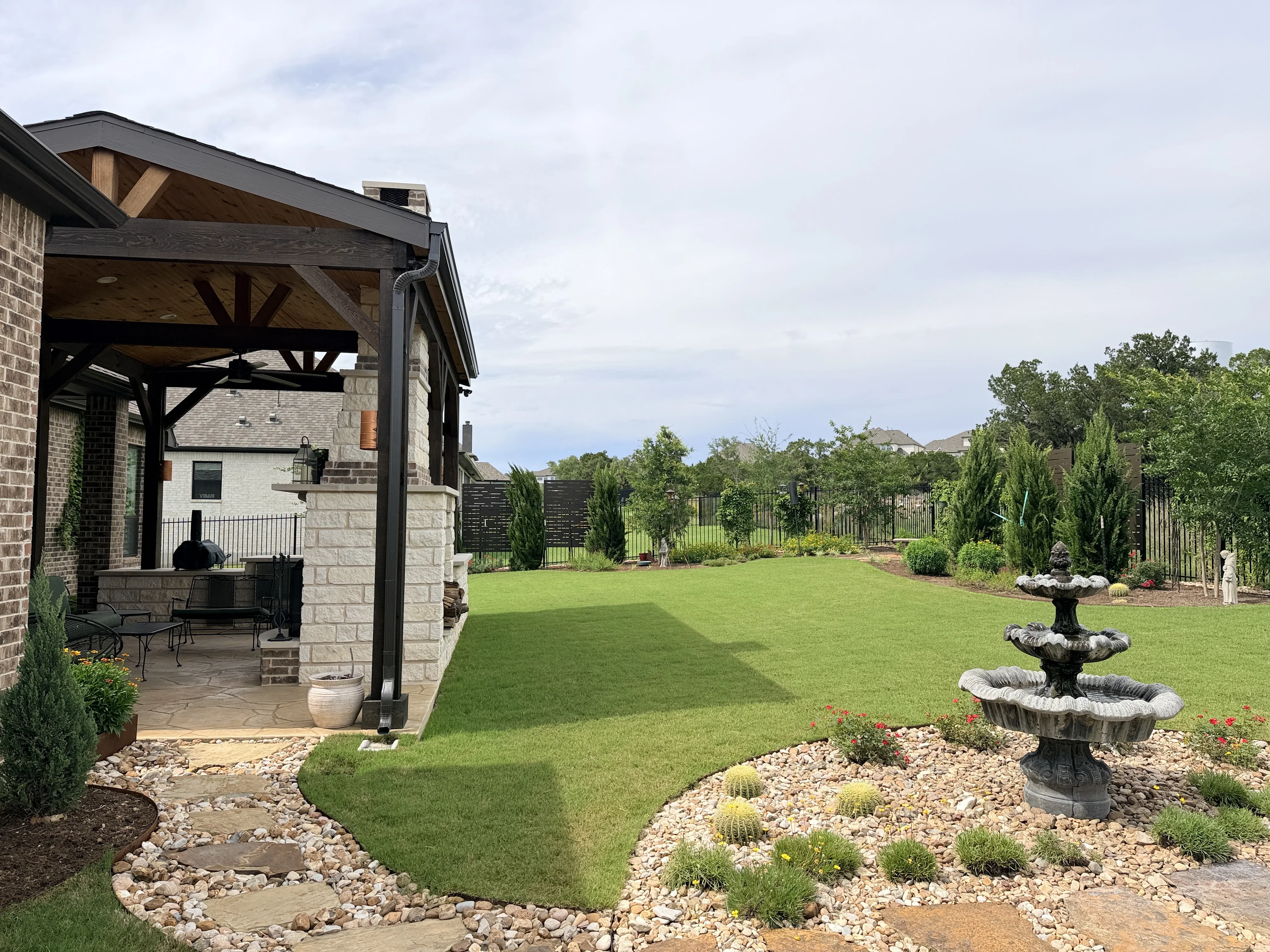
In an Austin yard, grass can thin and die under cedars and live oaks, or burn up in summer on a once-a-week sprinkler schedule. Lawns come up in more than a third of the requests homeowners send us. You can replace yours with native plant beds, xeriscape planned for low water use, groundcover plants that spread across shady ground, or new sod where there’s enough sun.
Jennifer designs the plan and picks the plants, and Charles builds it with our own in-house crews. We design and install native plant beds and xeriscapes, and we lay sod. We match plants to the sun, soil, and water each spot gets in our garden design work.
Why Grass Fails Under Austin Shade Trees
Even St. Augustine, the most shade-tolerant warm-season lawn grass (the kind that grows in Austin’s summers), needs at least 4 to 6 hours of light a day to survive. If a spot is too shady for St. Augustine, it’s too shady for any warm-season grass. As trees age, their canopies get denser and they compete with grass for water and nutrients, which is why a lawn that once grew well can thin out. Extra water or fertilizer can’t replace light, and heavily shaded grass needs less of both.
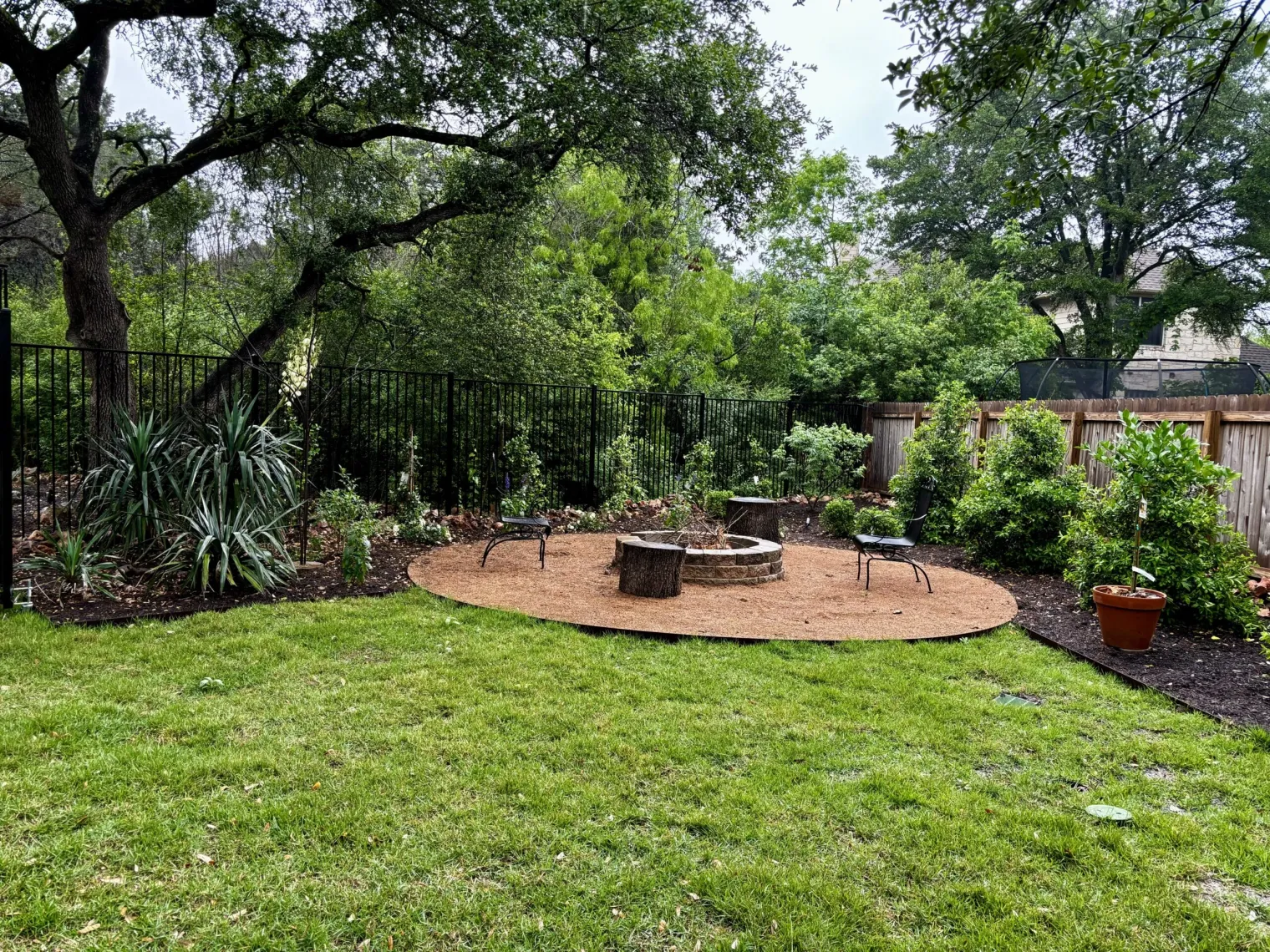
Removing a few selected limbs lets more light through the canopy, and removing low limbs lets light in from the sides. You can also set the mower higher in shady spots because the blades catch the light the remaining grass needs. With oaks, avoid pruning or wounding them from February through June, and paint every fresh oak wound at any time of year because fresh wounds attract the insects that spread oak wilt. If trimming still leaves too little light, that ground does better as a bed of shrubs, perennials, or groundcover, low plants that cover the soil.
Austin’s Watering Schedule and Your Lawn
Austin has been under Austin Water’s Conservation Stage watering rules since September 2025, so check your watering day when you set your sprinklers. At homes, automatic and manual sprinkler systems can run one day a week in the early morning or late evening. You can hand-water with a hose any time, and hose-end sprinklers and drip irrigation get two days a week. Through summer, a lawn on automatic sprinklers gets one watering day a week, and beds on drip get two.
Spray heads made for turf water native plants poorly, so beds that replace a lawn need the old heads capped or the zone converted to drip irrigation, which uses tubing to water at the roots. We install irrigation systems, including drip. A newly installed xeriscape, a yard designed to need less water, can qualify for a variance with its own watering schedule. The regular rules apply until the variance is approved.
Lawn Alternatives for Shade and Sun
Groundcover for Shade
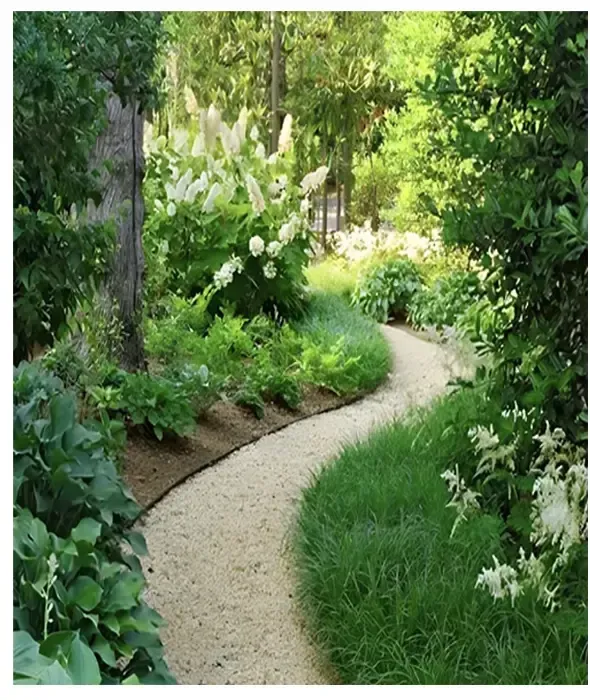
Groundcover is low-growing plants that spread over bare soil. Horseherb is native here, grows in dry shade with very little water, takes some foot traffic, and can be mowed like a lawn. Evergreen sedges such as Texas sedge and meadow sedge need little water and cover ground in masses, while lyreleaf sage grows in dry shade with little water and has purple flowers in spring. For deeper shade under trees, try native pigeonberry or inland sea oats, and browse Austin’s native plant guide.
Native Beds and Xeriscape for Sun
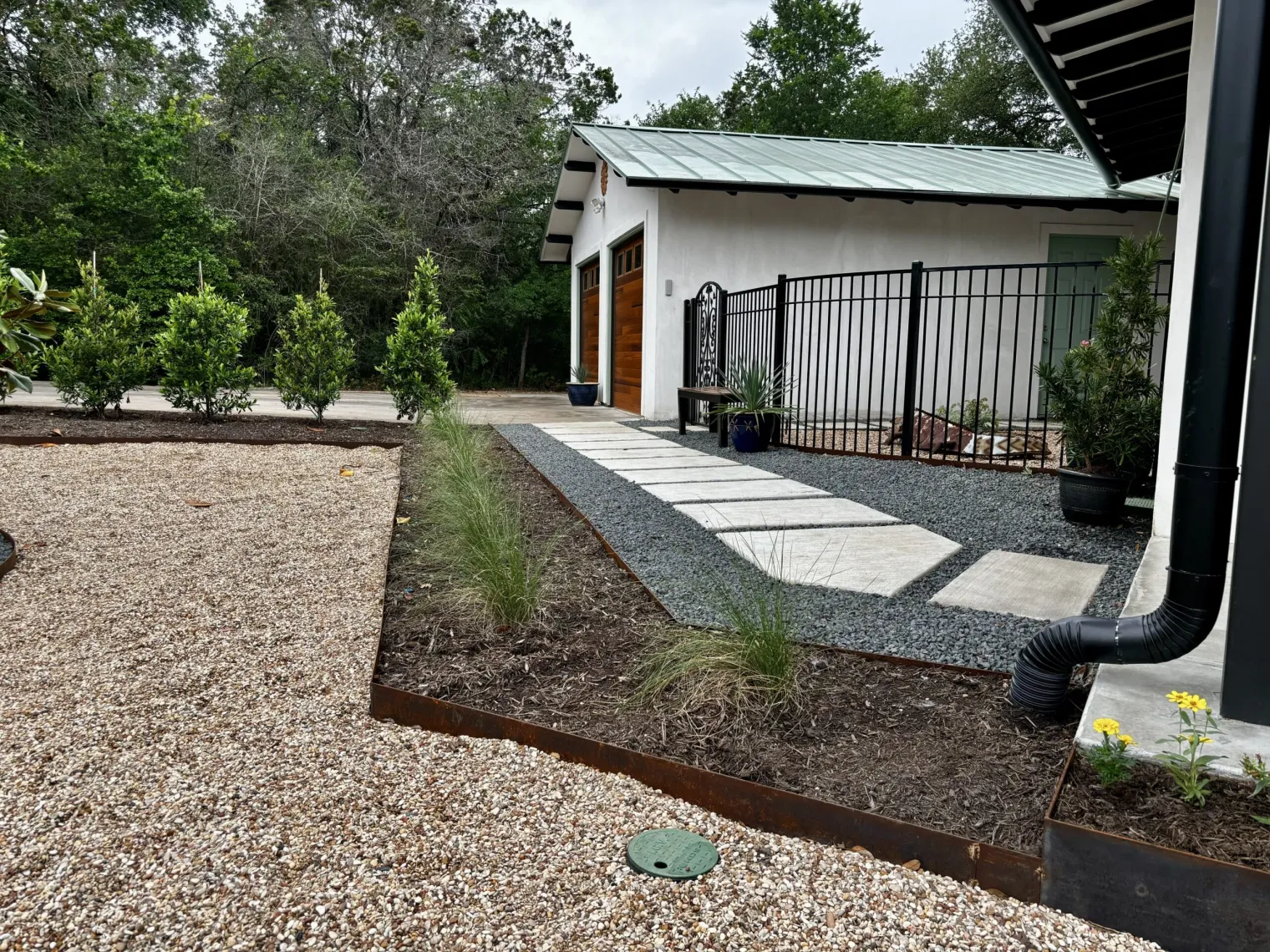
For a sunny spot, xeriscape means designing your yard around plants that need little or very little water, often with gravel or mulch between the beds. Blackfoot daisy and damianita both need very little water, grow in full sun, and suit rock gardens. Flame acanthus is a shrub that needs very little water, with orange-red flowers that draw hummingbirds. Autumn sage, rock rose, and Turk’s cap handle sun or part shade, and all of these plants are native to the Edwards Plateau, the limestone hill country on Austin’s west side.
New Sod Where There’s Sun
Where there’s enough sun, new sod is a good option, and we lay sod lawns. St. Augustine handles the most shade of the lawn grasses, though it still needs 4 to 6 hours of light a day. St. Augustine sod does best laid in late spring or early summer because its roots need time to grow before fall and winter frosts. Native, drought-tolerant buffalograss grows in full sun, needs mowing only once or twice a season to hold its height, and does worse in shade than zoysia.
Austin Water’s Rebate for Replacing a Lawn
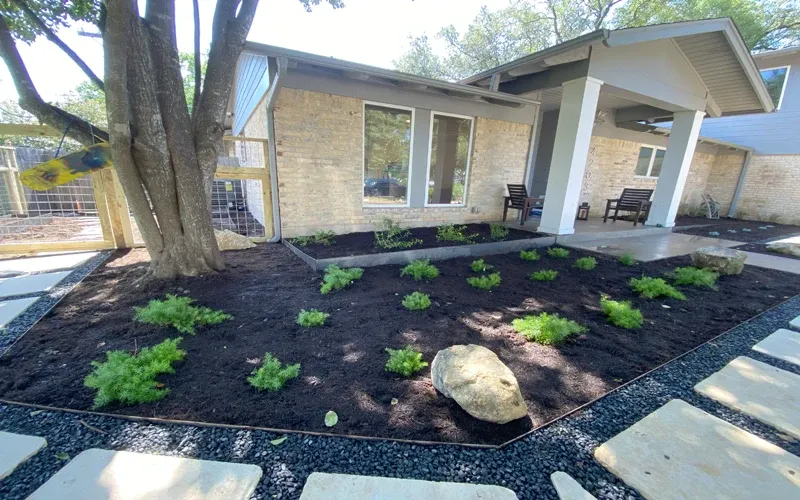
Austin Water customers can get a rebate of up to $3,000 for turning lawn into a native plant bed, as outlined in the rebate guide. Austin Water requires at least 75% of the area to be healthy grass, so a dead lawn won’t qualify. Work started before Austin Water approves the project won’t qualify either, so if your grass is thinning but still mostly alive, apply before anything gets torn out.
How We Plan a Lawn Replacement
We start our landscape design process with a consultation where we go over your goals, look at your property, and suggest options that fit your preferences and budget. Jennifer then draws a custom design plan with plants chosen for each spot in your yard, and you approve it before installation starts. Homeowners mention her plant choices, and Ann W. wrote that Jennifer is “very knowledgeable at helping the customer in selecting plants that will survive the Texas heat.”
Our design fees start at $500, and we offer some designs on a complimentary basis for select projects. The price of the work depends on the project’s size, how complex it is, its features, and the materials you choose. Once you approve the plan, Charles and our in-house crews build it, and we don’t use subcontractors.
Lawn Replacement Questions
What Groundcover Grows in Shade in Austin?
Horseherb grows in dry shade in Austin. It’s a native groundcover, a low plant that covers the soil, and it needs very little water, takes some foot traffic, and can be mowed. Texas sedge stays green year-round, needs little water, and can be planted in masses. Lyreleaf sage also does well in dry shade and has purple flowers in spring.
Will Grass Grow Under Oak Trees?
Often, grass won’t grow under a dense oak canopy. St. Augustine is the most shade-tolerant warm-season grass, meaning grass that grows in warm weather, and it still needs 4 to 6 hours of light a day. Removing a few selected limbs can let in enough light, but prune oaks only outside February through June and paint every cut. If it’s too shady for St. Augustine, no warm-season grass will grow there, so groundcover or a planted bed fits better.
How Often Can I Water My Lawn in Austin?
You can water once a week with an automatic or manual sprinkler system under Austin Water’s Conservation Stage rules, in place since Sept. 2, 2025. Odd-numbered addresses water Wednesday and even-numbered addresses Thursday, between midnight and 10 a.m. or 7 p.m. and midnight. Hose-end sprinklers and drip irrigation, which waters near the roots, get 2 days a week. You can hand water with a hose any time. See Austin Water’s watering-day page.
Does Austin Water Pay You to Replace Your Lawn?
Yes. Austin Water customers can get up to $3,000 to convert a lawn to a native plant bed. At least 75% of the area must be healthy grass, so dead lawns don’t qualify. The project needs approval before any work starts, and the plants must cover more than half the area at full size. Austin Water’s rebate guide also requires turf spray heads in the area to be capped or converted to drip irrigation, which waters plants near their roots.
When Is the Best Time to Lay Sod in Austin?
For St. Augustine sod in Austin, lay it in late spring or early summer because the grass is actively growing. St. Augustine sod can go down year-round in much of Texas, and it does better when its roots have more time before fall and winter frosts. In shade, check that the spot gets 4 to 6 hours of light first.