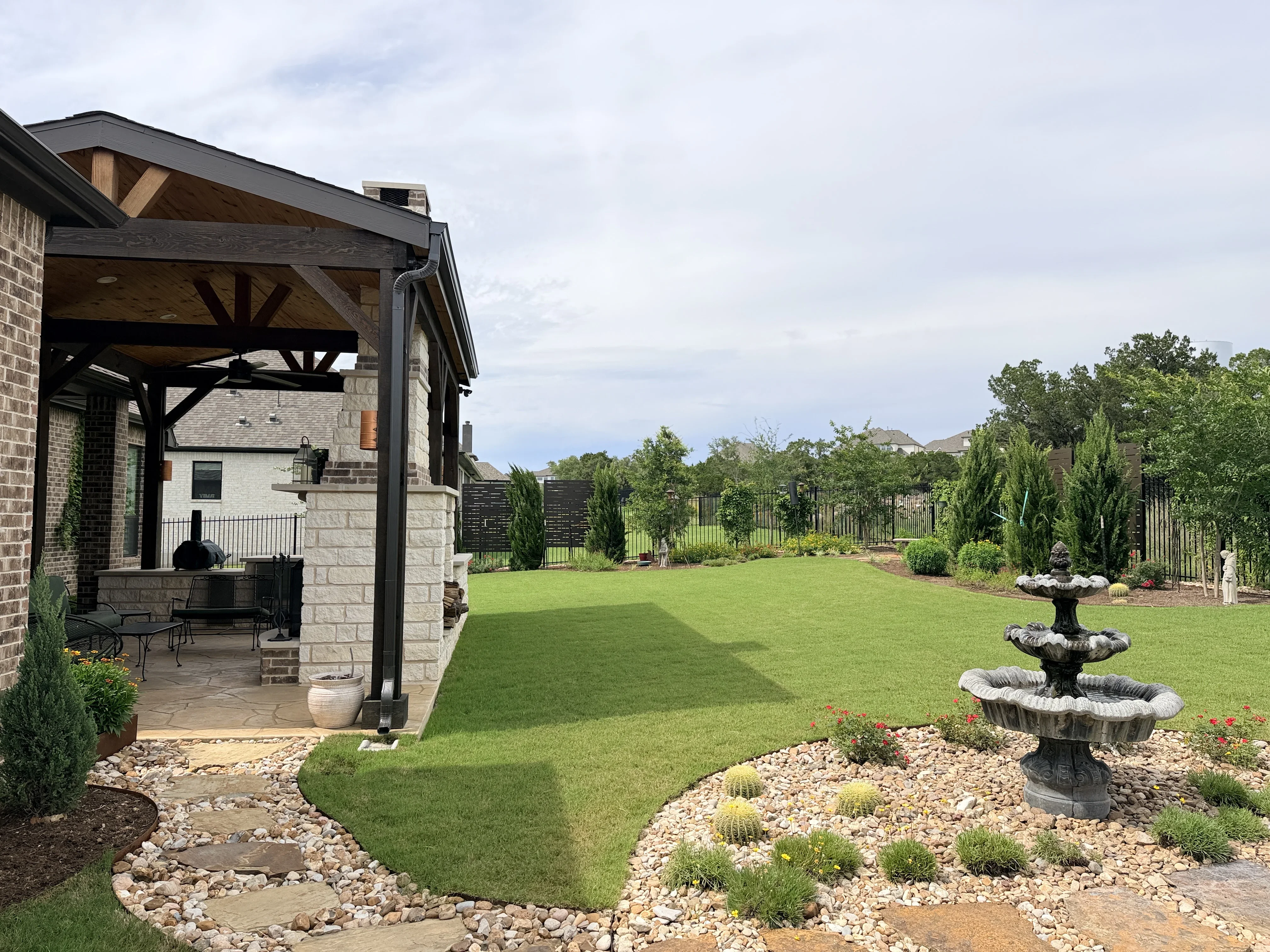
Covered Patio Ideas for Year-Round Use in Austin
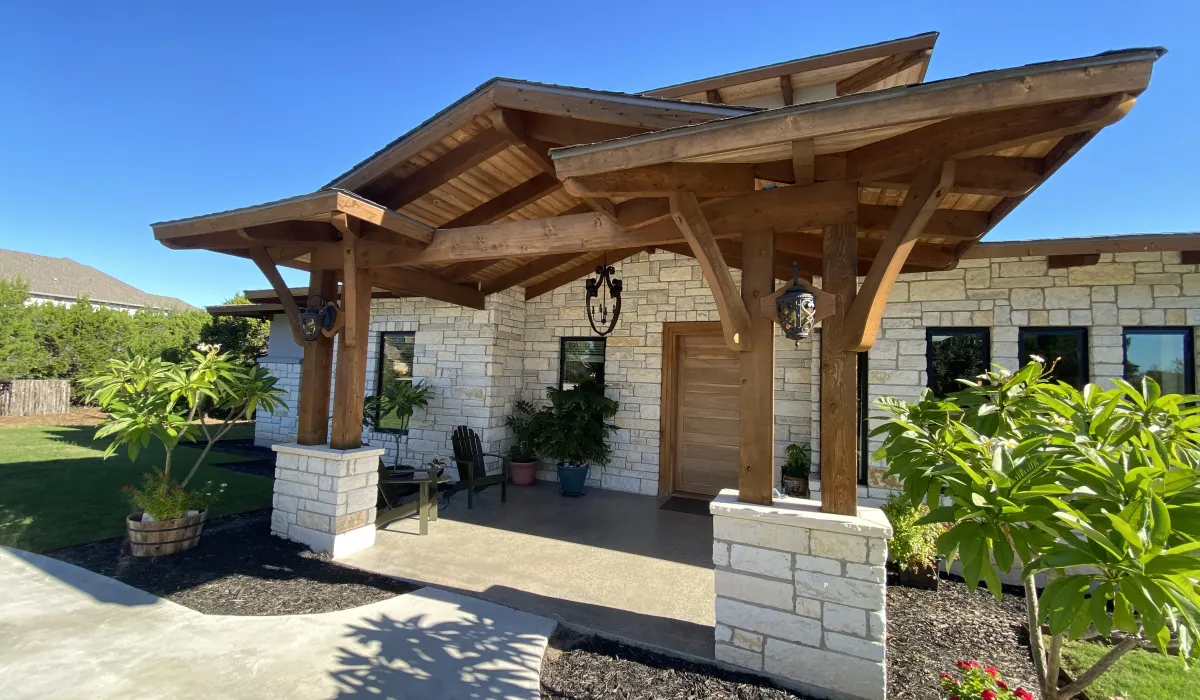
Austin homeowners planning an outdoor renovation often start with the same request: a covered patio that works through the summer heat and stays usable into the cooler months. Violet Crown designs each covered patio around how a family plans to use the space through every season of the year.
Why a Covered Patio Works for Austin's Climate
Austin sees more than 300 sunny days a year, and average high temperatures stay above 90 degrees from June through September. An uncovered patio slab becomes unusable during the same months when people want to be outside the most.
A covered structure changes that math. Shade alone can drop the surface temperature of a patio floor by 20 degrees or more compared to a spot in direct sun, giving a family a reason to use the yard through the mild months of fall, winter, and early spring as well as the peak weeks of summer entertaining. Homeowners looking ahead to the 2026 season often start their patio projects in late winter so the structure is finished before the heat arrives.
Shade and Structure Options to Consider
Not every yard needs the same type of cover. The right structure depends on the home's architecture, the direction the patio faces, and how much rain protection matters.
Common covered patio ideas include:
- Solid roof structures that tie into the home's existing roofline and block sun and rain completely
- Pergolas with slatted or louvered tops that filter light while still letting some sun through
- Retractable canopies for patios that only need shade part of the day
- Motorized louvered roofs that adjust from fully open to fully closed
A west-facing patio usually needs more solid coverage to handle intense afternoon sun, while a patio already shaded by mature trees on the east side of a property might only need a partial structure.
Materials That Hold Up to Texas Weather
Material choice affects how a covered patio looks in year one and how much upkeep it needs in year ten. Austin's mix of intense sun, sudden downpours, and occasional freezes narrows the field.
Natural stone and stamped concrete are common flooring choices for covered patios in Austin, since both resist fading and hold up under heavy foot traffic. For the roof and support structure, cedar and treated pine remain popular for their look, while steel and aluminum frames need less maintenance over time and pair well with a more modern design.
Lighter-colored materials stay noticeably cooler underfoot in direct sun than darker finishes, which matters on a patio that gets afternoon exposure.
What Covered Patios Typically Cost
Covered patio costs vary widely based on size, roof type, and materials, so a single number rarely tells the full story. A simple pergola built over an existing slab costs far less than a fully enclosed structure with a solid roof, electrical wiring, and a built-in ceiling fan.
Roof type has the biggest impact on price. A slatted or louvered pergola typically costs less than a solid, fully insulated roof tied into the home's existing structure, and features like lighting, fans, and outdoor kitchens add to the total. We provide an exact quote after a site visit, once we know the square footage, structure type, and finishes involved.
Adding Comfort Features for Every Season
Shade solves the biggest comfort problem, but a few additional features stretch a covered patio's usable season even further. Ceiling fans keep air moving during Austin's humid summer evenings, and a fireplace or a couple of freestanding heaters make a covered patio usable on the cooler nights that show up between November and February.
Retractable screens are worth considering for anyone who wants to keep bugs and glare out without closing off the space completely. Combined with layered lighting such as path lights, string lights, and a few accent fixtures, a well-planned covered patio becomes an outdoor living space that gets regular use across most of the year, from the hottest weeks of summer through the cooler stretches of winter.
Violet Crown builds covered patios as part of a full deck, patio, and veranda design plan, so the structure, materials, and comfort features get planned together from the start.