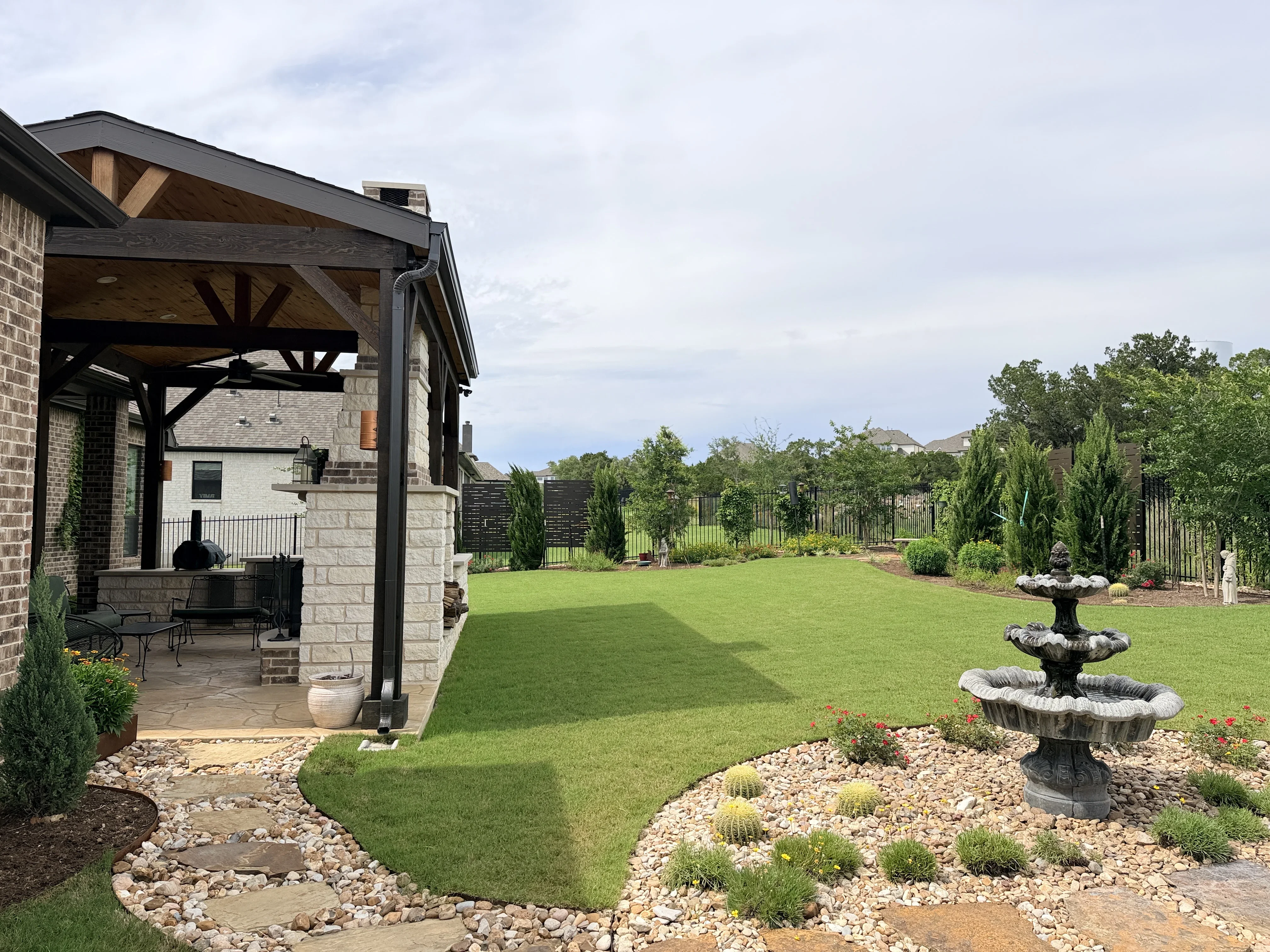
How to Integrate a Pond or Water Feature Without Wasting Water
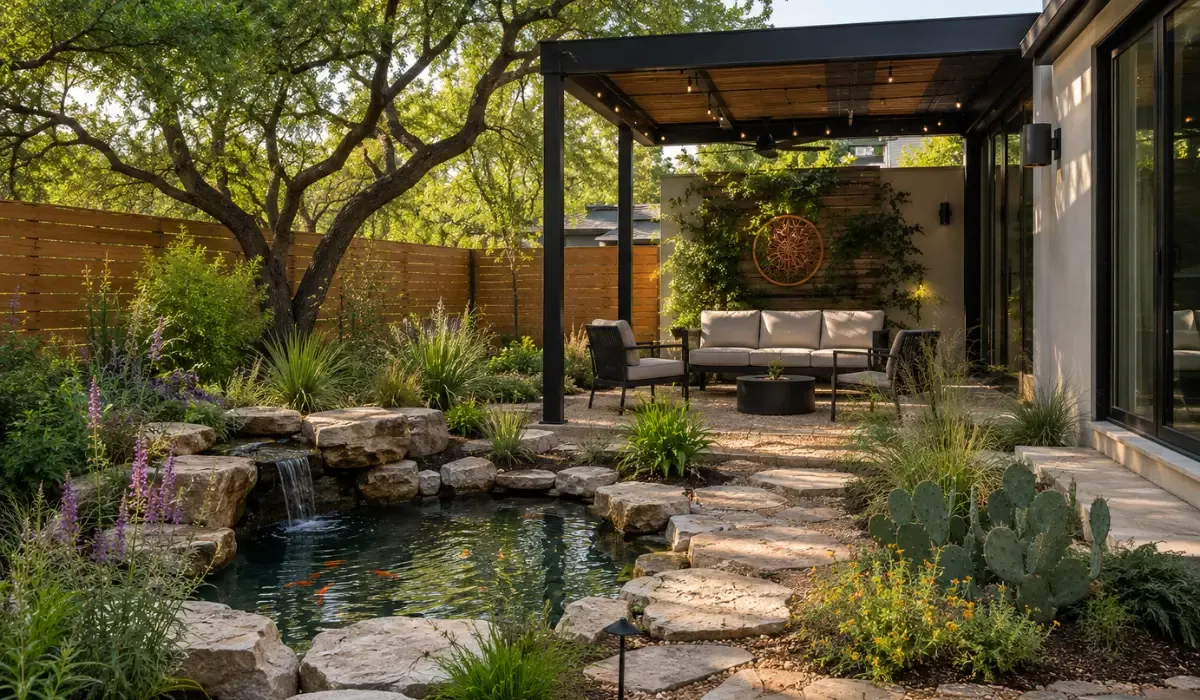
Yes, you can have a stunning water feature in Austin, without wasting water. Here’s how to make it sustainable and efficient.
Texas summers place heavy pressure on outdoor water use long before drought restrictions arrive. Smart planning helps homeowners enjoy a peaceful backyard without creating unnecessary waste.
Violet Crown Austin Landscaping and Design creates outdoor spaces designed for beauty, comfort, and sustainability in Central Texas conditions. The right backyard addition can soften noise, cool visual heat, and improve outdoor comfort while still supporting conservation goals for homeowners searching for landscaping Austin TX solutions.
Water Features That Work for Austin’s Climate
Backyard pond and fountain systems with efficient circulation usually perform best during dry months.
One issue many Austin homeowners discover too late involves evaporation. Large decorative fountains with wide spray patterns often lose significant water during triple-digit summer temperatures. Smaller recirculating systems usually perform better because reduced surface exposure limits water loss.
Reflecting Pools, Bubblers, and Fountains
Compact designs require less water while still creating movement and relaxing sound throughout the yard.
Bubblers and smaller fountains fit nicely beside patios, entry gardens, and outdoor seating spaces. Reflecting pools create a clean modern appearance while keeping water use manageable when properly sized.
Many homeowners interested in water-wise features prefer designs connected naturally with surrounding landscaping instead of oversized focal points.
| Backyard Addition | Water Efficiency | Maintenance Level | Typical Budget Range | Best Backyard Fit |
|---|---|---|---|---|
| Bubblers | High | Low | $1,500, $4,000 | Patios and courtyards |
| Reflecting Pools | Moderate | Medium | $5,000, $12,000+ | Modern landscapes |
| Small Recirculating Ponds | High | Medium | $3,000, $8,000 | Wildlife-friendly yards |
| Disappearing Fountains | Very High | Low | $2,500, $7,000 | Drought-smart backyards |
Homeowners improving planting areas before summer often combine these features with spring garden planning for a more balanced outdoor layout.
Small-Scale Ponds With Recirculating Systems
A well-designed pond does not require huge amounts of water for strong visual impact.
Recirculating systems reuse water continuously instead of pulling fresh water into the system. This process reduces waste and supports cleaner conditions throughout the year.
Smaller ponds also:
- improve circulation efficiency
- reduce algae buildup
- reduce long-term upkeep
- lower evaporation exposure
This setup works especially well for homeowners exploring ponds and water features supporting birds, pollinators, and natural planting without creating difficult upkeep.
Many backyard pond tips focus only on pond size. Circulation quality, shade coverage, and filtration usually matter more long term.
One Austin homeowner wanted a larger koi pond beside a fully exposed patio area. After reviewing summer sun exposure and evaporation concerns, a smaller shaded recirculating pond created a better long-term solution.
Disappearing Fountains for Zero Standing Water
Some homeowners enjoy moving water sounds but do not want a visible pond.
Disappearing fountains store water beneath decorative stone or gravel. Water cycles upward continuously while hidden basins reduce standing water exposure.
This option works well for:
- smaller backyards
- modern landscape styles
- family-friendly spaces
- drought-conscious homeowners
Outdoor entertainment spaces pair nicely with custom outdoor living spaces including lighting, patios, and low-maintenance landscaping.
How to Choose the Right Water Feature for Your Yard Size & Style
The best backyard addition should match daily outdoor use instead of simply filling empty space.
Zen vs. Wildlife-Focused Designs
A minimalist backyard layout creates a different experience compared with a wildlife-focused pond.
Zen-inspired layouts usually include:
- smooth stone
- structured planting
- gentle water movement
- clean geometric lines
Wildlife-friendly designs often include:
- shallow pond edges
- layered greenery
- native aquatic plants
- natural stone placement
Both approaches work well within Austin landscapes. The better choice depends on whether you prefer a quiet retreat or a more active backyard ecosystem.
One planning mistake homeowners make involves copying online inspiration photos without considering Austin's heat or water restrictions. A backyard design performing well in cooler climates may struggle during Central Texas summers.
Container Water Gardens for Patios
Limited space does not remove the possibility of adding water elements within your landscape.
Container water gardens work well for:
- patios
- shaded courtyards
- compact outdoor spaces
- smaller entertainment areas
Ceramic bowls and decorative stone containers can support aquatic plants plus gentle circulation while requiring very little water.
This approach fits naturally within a low-water landscape designed for easier maintenance during hotter seasons.
Tiered Designs for Sloped Yards
Sloped properties can improve circulation efficiency when designed correctly.
Tiered systems guide water flow between sections with gravity support. This reduces pump strain while creating softer transitions throughout the landscape.
Poor drainage planning creates problems quickly within Austin yards containing elevation changes. Erosion and runoff usually appear once grading gets ignored early during design planning.
Homeowners planning larger outdoor upgrades often benefit from reviewing Austin irrigation planning before adding new water elements.
Water-Saving Strategies to Implement From the Start
Strong conservation results begin before installation starts.
Recirculating Pumps
A recirculating system reuses existing water continuously instead of introducing unnecessary fresh water into the design.
This setup:
- lowers water waste
- improves circulation
- helps reduce algae growth
- supports cleaner operation
Modern pumps can adjust flow rates depending on seasonal conditions and feature size.
Rainwater Catchment Integration
Rainwater collection supports landscaping plus pond performance during drier months.
Collected rainwater often helps with:
- pond refills
- surrounding irrigation
- landscape watering
- circulation support
Many homeowners exploring sustainable landscaping appreciate how rainwater systems reduce pressure on traditional outdoor water use.
One approach we recommend involves placing rainwater collection near planting zones surrounding ponds or fountains. This creates more efficient irrigation support during hotter months.
The City of Austin Water Conservation program encourages practical outdoor conservation strategies for residential properties.
Solar-Powered Circulation Options
Solar-powered pumps have become more reliable for smaller backyard systems.
These options work especially well for:
- decorative fountains
- compact ponds
- container water gardens
- sunny backyard areas
A well-designed drought-smart backyard usually combines multiple efficient systems instead of relying on one single solution.
This often includes:
- native plants
- smart irrigation
- shaded seating spaces
- efficient circulation systems
- water-conscious hardscaping
Maintenance Tips to Keep Features Clean and Efficient
Backyard pond systems remain more efficient when maintenance stays consistent.
Debris Management
Leaves, grass clippings, and pollen buildup can reduce circulation surprisingly fast.
Austin homeowners often notice oak pollen buildup during spring before realizing filters have become restricted.
Simple cleanup each week helps:
- maintain water clarity
- reduce pump strain
- improve circulation
- prevent unnecessary water replacement
Pump Inspection and Filter Cleaning
A struggling pump often increases waste before homeowners notice performance issues.
Watch for:
- weak water flow
- cloudy conditions
- unusual pump noise
- inconsistent circulation
Routine inspections usually prevent larger repairs later.
The EPA WaterSense program provides practical guidance for improving outdoor water efficiency surrounding residential landscapes.
Avoiding Evaporation Waste
Direct sunlight increases evaporation quickly during Austin summers.
Several design adjustments can reduce water loss:
- placing features near partial shade
- limiting excessive splashing
- surrounding water with layered planting
- maintaining proper water depth
- reducing unnecessary surface exposure
Homeowners comparing long-term backyard upgrades often want a landscaping company familiar with Austin heat, drought concerns, and sustainable outdoor planning. Our background, Austin roots, and design-build approach appear within the Austin landscaping company page.
Our pond and fountain specialists help homeowners evaluate these decisions before construction begins.
Local Regulations and Permits You Might Need
Outdoor pond systems may involve local restrictions depending on neighborhood rules and system size.
Water Use Policies During Drought Season
Austin drought restrictions can influence outdoor water management throughout the year.
Some neighborhoods and HOA communities may regulate:
- fountain height
- visible water exposure
- drainage flow
- pump placement
- pond size
Reviewing these requirements early usually prevents costly redesigns later.
Our Austin landscaping service areas include neighborhoods with different property requirements and HOA guidelines.
Wildlife-Safe Standards
A sustainable backyard should support wildlife safely without creating stagnant conditions.
This usually includes:
- gradual pond edges
- healthy circulation
- mosquito prevention
- balanced filtration
- safe aquatic planting
HOA Limitations
HOA guidelines vary widely throughout Austin communities.
Some properties allow:
- compact fountains
- hidden circulation systems
- container water gardens
Others restrict:
- exposed standing water
- larger pond systems
- visible mechanical equipment
Common homeowner concerns also appear within our Austin landscaping FAQs.